
Sidewalks, Walkways & Flatwork
Create safe, attractive pathways and surfaces that connect your property and enhance your outdoor spaces.
Why Quality Flatwork Matters
Flatwork is the concrete industry term for any horizontal surface like sidewalks, walkways, and pathways. These surfaces do more than just provide a place to walk. They guide visitors to your door, connect different areas of your property, and keep feet clean and dry. Well-designed flatwork also adds serious curb appeal and makes your property more functional.
Here in Calexico, properly installed flatwork handles our unique challenges. It stays level despite temperature extremes, provides slip resistance when wet, and holds up under constant sun exposure. Poor quality flatwork cracks, settles, and becomes a trip hazard within just a few years. Quality installation means your sidewalks and walkways stay safe and attractive for decades.
When you choose Calexico Concrete for your flatwork needs, you get experienced crews who understand proper grading, drainage, and finishing techniques. We've installed thousands of feet of sidewalks and walkways in this area, and we know what it takes to create surfaces that perform and look great.
Benefits of Professional Flatwork Installation
- Safety first: Level, stable surfaces eliminate trip hazards and provide secure footing.
- ADA compliance: We build walkways that meet accessibility standards for public and commercial properties.
- Property value: Clean, well-maintained walkways boost your home's appearance and resale value.
- Drainage control: Properly sloped surfaces direct water away from buildings and prevent pooling.
- Design flexibility: Choose from colors, textures, and patterns that complement your property.
Types of Flatwork We Install
Every property has different flatwork needs. Here are the most common types of concrete surfaces we create.
Public Sidewalks
Public sidewalks along streets and in front of properties must meet local code requirements for width, thickness, and grade. We work with city specifications to ensure your sidewalk passes inspection the first time. This includes proper expansion joints, correct thickness, and smooth transitions at driveways and intersections. We also handle any required permits and inspections.
Private Walkways
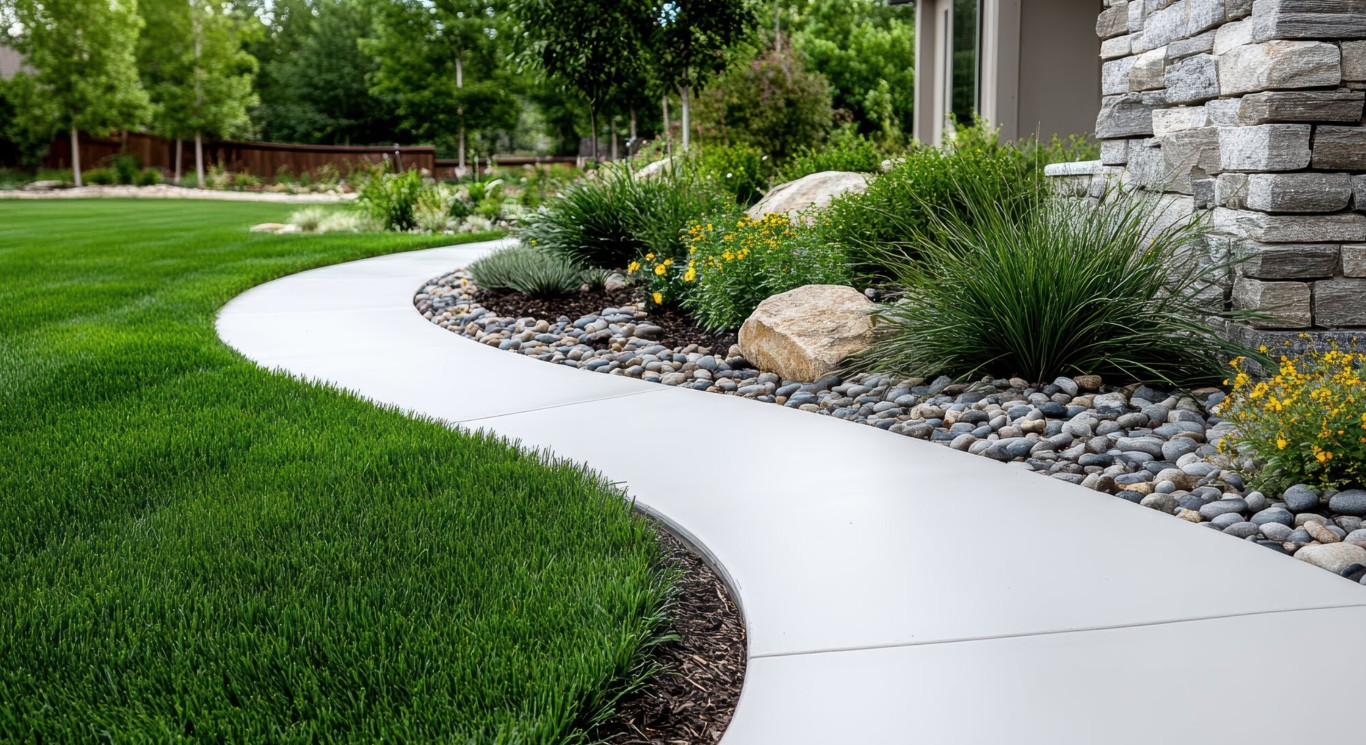
Private walkways on your property give you more design freedom. You can create straight paths, curved routes, or winding trails through landscaping. We help you plan walkways that make sense for how you use your property. Want to connect your driveway to your front door? Need a path to your backyard patio? Looking for a garden walkway that winds through your landscaping? We can design and build it.
Commercial Walkways
Business properties need walkways that handle heavy foot traffic while meeting ADA accessibility standards. This means proper slopes, sufficient width, and appropriate surface textures. We regularly install commercial walkways for retail centers, office buildings, and industrial facilities. These projects often require coordination with other trades and strict adherence to building codes.
Other Flatwork Applications
Flatwork includes any level concrete surface. This covers parking pads, RV pads, equipment pads for AC units and generators, and concrete aprons. We also install flatwork for basketball courts, shuffle board courts, and other recreational surfaces. Each application requires specific thickness and reinforcement to handle its intended use. If you're planning a larger outdoor living area, consider combining walkways with our patio installation services for a complete outdoor transformation.
Our Flatwork Installation Process
Quality flatwork starts with careful planning and proceeds through several important steps.
Design and Layout
We begin by understanding how you'll use the space and what building codes apply. For public sidewalks, codes dictate most design elements. For private walkways, you have flexibility in width, path, and style. We mark the layout with stakes and string so you can visualize the finished walkway before we start digging.
Excavation and Base Prep
Next, we excavate to the proper depth, typically removing 6 to 8 inches of soil. We check for and mark any underground utilities before digging. Then we install a compacted gravel base that provides drainage and prevents settling. The base must be perfectly compacted and level because any problems here will show up in the finished concrete.
Forming and Grading
We set up forms along both sides of the walkway to contain the concrete and create clean edges. We also establish the proper grade so water drains away from buildings. Even a slight slope, just a quarter inch per foot, makes a huge difference in how well water runs off. Getting the grade right prevents puddling and ice formation in cooler months.
Pouring and Finishing
On pour day, we place the concrete and work it to eliminate air pockets. We screed it level with the forms, then float and trowel the surface to your desired finish. Most walkways get a broom finish that provides good traction. We can also create smooth finishes, exposed aggregate, or stamped patterns. We install expansion joints every few feet to control where cracks form. After finishing, we protect the concrete while it cures. Looking for other concrete improvements? Our driveway services can complement your new walkways perfectly.
Frequently Asked Questions
How wide should a walkway be?
Minimum walkway width is typically 36 inches for residential use and 48 inches for commercial properties to meet ADA requirements. However, wider is often better. A 48-inch residential walkway allows two people to walk side by side comfortably. Main walkways to your front door should be at least 42 to 48 inches wide to create a welcoming entrance. Secondary garden paths can be narrower, around 30 to 36 inches. We'll help you determine the right width based on the walkway's purpose and traffic level.
Do I need permits for a new sidewalk or walkway?
Public sidewalks along streets almost always require permits. Private walkways on your property may or may not need permits depending on local regulations and the scope of work. Some cities require permits for any concrete work over a certain square footage. We're familiar with local requirements and can handle permit applications for you. It's always better to check first rather than risk having to remove unpermitted work later.
How long does it take to install a walkway?
Most residential walkways take 1 to 2 days to complete. Simple, straight walkways might finish in a single day, while longer or curved paths with decorative elements take longer. We typically spend day one on excavation, base prep, and forming. Day two is for pouring and finishing. After that, the concrete needs to cure before you can walk on it. You can usually walk on it after 24 to 48 hours, but heavy use should wait about a week. The concrete continues to strengthen for about 28 days.