Retaining Walls & Concrete Masonry
Control slopes, prevent erosion, and add structural beauty with professionally built retaining walls and masonry work.
Why Retaining Walls Matter
Retaining walls do critical work that's not always obvious. They hold back soil on sloped properties, prevent erosion during heavy rains, and create level areas where you can build patios, gardens, or additional structures. Without proper retaining walls, slopes erode, soil washes away, and your property literally slides downhill over time.
Here in Calexico, retaining walls face unique challenges. Our soil conditions vary across the area, and heavy rains, though rare, can be intense. Temperature swings put stress on wall materials. A poorly designed or constructed retaining wall can fail catastrophically, causing major property damage. That's why proper engineering and quality construction matter so much.
When you work with Calexico Concrete for retaining wall construction, you get crews who understand soil mechanics, drainage requirements, and structural engineering. We build walls that hold back tons of soil pressure while looking great and lasting for decades.
Benefits of Quality Retaining Walls
- Erosion control: Walls prevent soil loss and protect your property from water damage.
- Usable space: Create level areas for landscaping, patios, or structures on sloped properties.
- Property value: Well-built walls improve appearance and increase your property's worth.
- Structural protection: Walls keep soil away from foundations and prevent undermining.
- Design flexibility: Choose from materials and styles that complement your property.
Types of Retaining Walls We Build
Different situations call for different wall types. Here are the most common retaining wall options we install.
Poured Concrete Walls
Poured concrete creates the strongest, most durable retaining walls. We build forms, install heavy reinforcement, and pour concrete to create solid walls that can handle significant height and soil pressure. These walls work well for both residential and commercial applications. We can finish them smooth or add texture, and they can be painted or stained to match your property's aesthetic.
Concrete Block Walls
Concrete block, also called CMU or cinder block, offers flexibility and strength. We lay blocks with steel reinforcement and concrete fill in the cores. Block walls go up faster than poured walls and cost less for many applications. They're perfect for moderate heights and can be finished with stucco, stone veneer, or left natural for an industrial look.
Segmental Block Walls
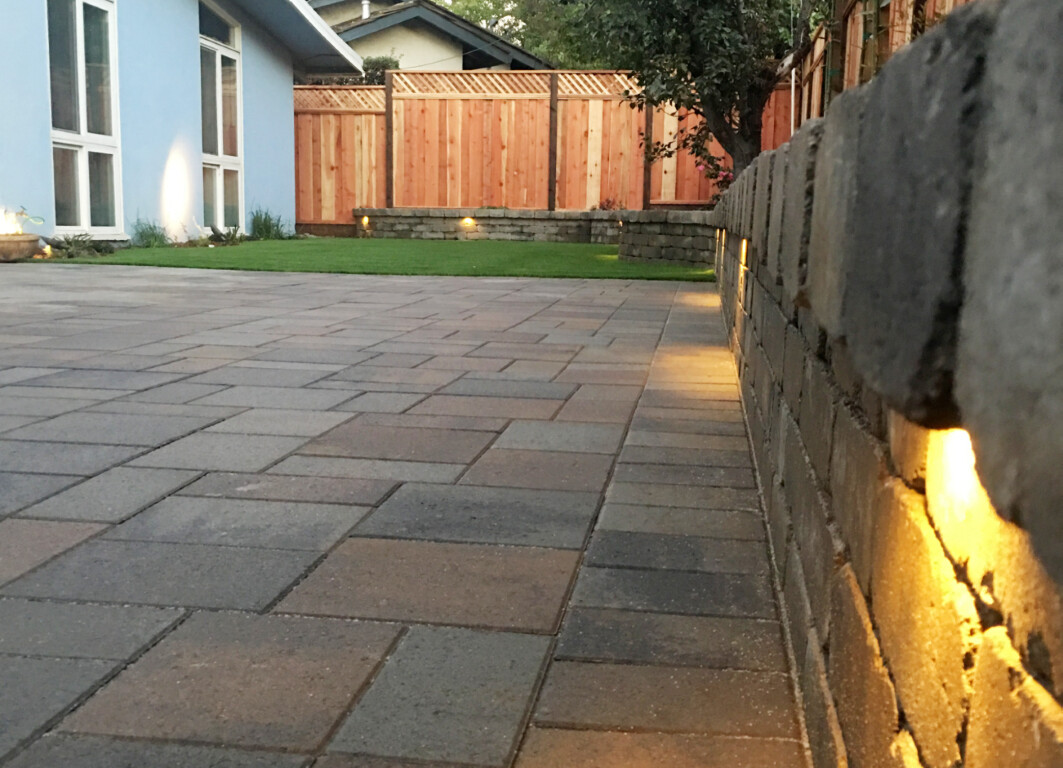
Segmental retaining wall blocks stack together using pins or their own weight. These systems come in various colors and textures that mimic natural stone. They're ideal for residential landscaping projects and can create curves and terraced designs. Installation is faster than traditional masonry, and the finished look is attractive and maintenance-free.
Other Masonry Work
Beyond retaining walls, we handle all types of concrete masonry. This includes garden walls, fence columns, outdoor kitchens, fire pits, and privacy walls. We also build structural walls for buildings and property boundaries. If you're planning comprehensive outdoor improvements, consider combining walls with our patio installation services or decorative concrete options for a complete landscape transformation.
How We Build Retaining Walls
Building a retaining wall that lasts requires careful planning and proper construction techniques.
Site Assessment and Engineering
We start by evaluating your slope, soil conditions, and drainage patterns. For walls over a certain height, engineering calculations determine the required foundation, reinforcement, and drainage systems. We also check for underground utilities and obtain any necessary permits. This planning phase ensures we build a wall that's both safe and code-compliant.
Foundation and Drainage
A solid foundation is critical for retaining walls. We excavate below grade and pour a concrete footing that provides a stable base. We also install drainage systems behind the wall. This typically includes gravel backfill and perforated drain pipes that carry water away. Proper drainage prevents water pressure buildup that could cause wall failure.
Wall Construction
We build the wall using the method appropriate for your project. Poured walls require forms, reinforcement, and concrete placement. Block walls go up course by course with steel and grout. Segmental walls stack with careful leveling and base preparation. Throughout construction, we check level, plumb, and alignment to ensure the wall is structurally sound and visually straight.
Backfilling and Finishing
Once the wall is built, we carefully backfill behind it with drainage gravel and compacted soil. This must be done in layers to avoid putting too much pressure on the wall at once. Finally, we apply any surface finishes like stucco or stone veneer, and grade the soil at the top and bottom of the wall for proper drainage. The result is a wall that protects your property while enhancing its appearance.
Frequently Asked Questions
How tall can a retaining wall be without engineering?
Local building codes typically require engineering for walls over 4 feet tall, though this varies by jurisdiction. Even shorter walls may need engineering if they support structures, hold particularly heavy or unstable soil, or are located near property lines. We recommend consulting with an engineer for any wall over 3 feet to ensure safety and code compliance. The cost of engineering is small compared to the risk of wall failure, and properly engineered walls often qualify for permits more easily.
What causes retaining walls to fail?
The most common cause of failure is poor drainage. When water builds up behind a wall, the pressure becomes enormous and can push the wall over. Other common problems include inadequate foundations, lack of reinforcement, poor soil compaction, and underestimating the loads the wall must support. This is why working with experienced professionals matters so much. We've seen too many DIY and poorly constructed walls that failed within a few years, requiring complete replacement at greater cost than proper construction would have been.
How long do retaining walls last?
A properly designed and built retaining wall can last 50 years or more. Poured concrete and concrete block walls tend to have the longest lifespans when built correctly. Segmental block systems typically last 20 to 40 years depending on quality and conditions. The key factors affecting lifespan are drainage quality, foundation stability, proper reinforcement, and regular maintenance. You should inspect your wall annually for signs of movement, cracking, or drainage problems. Catching small issues early prevents major failures later.